
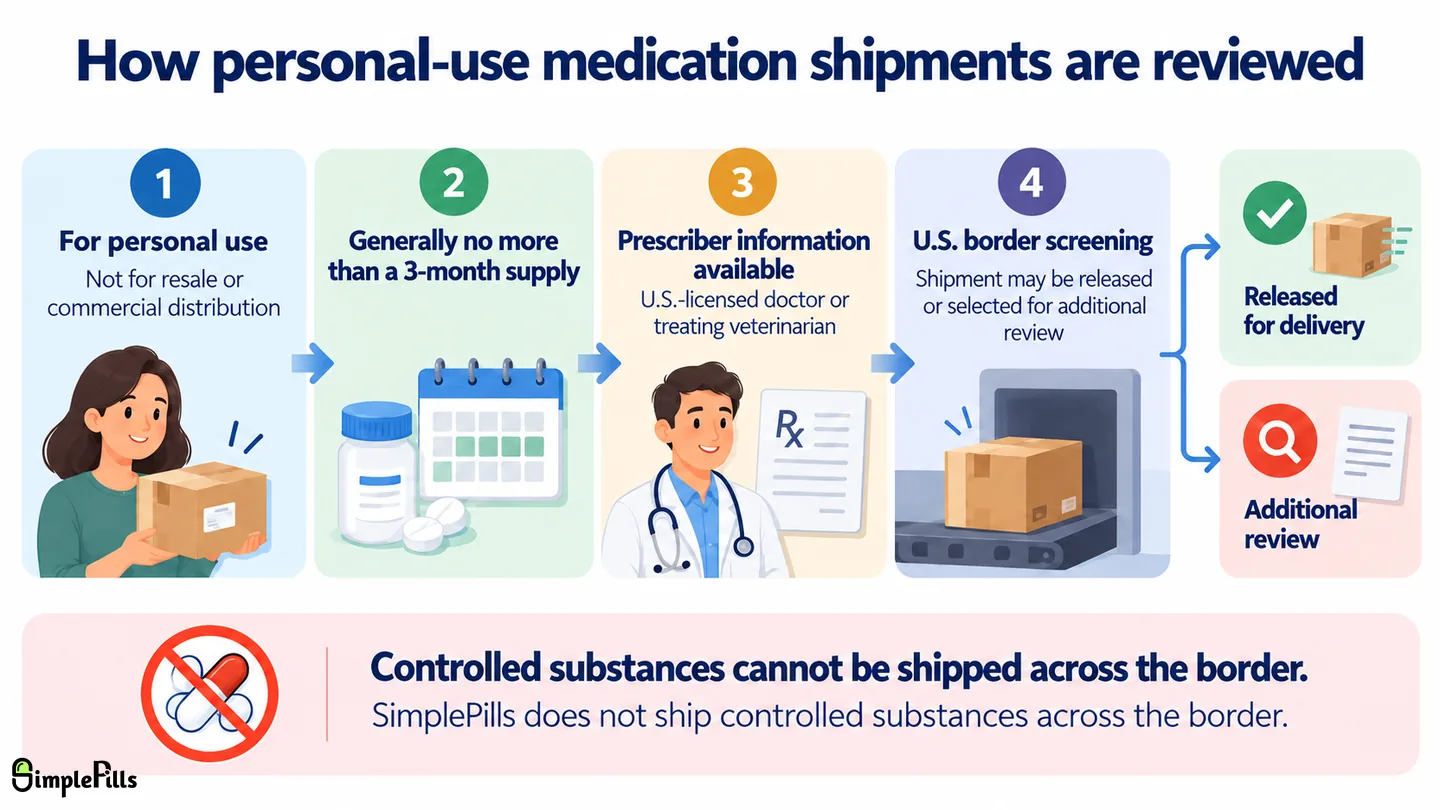
The answer is not a simple yes or no, because the exact medication, quantity, and purpose matter. U.S. rules treat personal importation differently from commercial drug importation. Personal importation means the medication is for one person's own use, not for resale or commercial distribution.
Even though FDA says that, in most circumstances, individuals cannot import foreign drugs for personal use, FDA personnel may exercise discretion and allow certain personal-use shipments on a case-by-case basis.
What does FDA look at for personal importation, and how much can be imported?
FDA may look at the purpose of the medication, whether it presents an unreasonable risk, whether it is clearly for personal use, and the amount being imported.
The quantity is generally no more than a three-month supply. FDA's policy also says the patient should provide the name and address of the U.S.-licensed doctor responsible for the treatment. In practice, this is usually the prescriber or clinician managing the treatment.
This information is typically included on a valid prescription, which is one reason it is important to use a licensed Canadian pharmacy that requires one.
Do I need a prescription?
For prescription medication through SimplePills, yes. SimplePills requires a valid prescription before dispensing prescription medication.
If FDA reviews a personal-use shipment, prescription and prescriber information can also help show that the medication is for legitimate personal medical use. FDA's policy specifically looks for information about the U.S.-licensed doctor responsible for the treatment.
For pet medications, FDA says the same general personal-importation criteria apply, using documentation from the licensed veterinarian treating the pet instead of a physician.
What medications cannot be handled this way?
The main category to separate out is controlled substances. This includes many narcotic pain medications, stimulants, and other medications that have a higher potential for abuse or dependence.
Controlled substances are governed separately by the Drug Enforcement Administration rather than the ordinary FDA personal-importation pathway. Some controlled substances may be subject to narrow rules for travelers carrying their own medication, but they should not be treated like a normal personal-importation prescription shipment.
For SimplePills, the rule is straightforward: we do not dispense or ship controlled substances across the border.
What happens when the package reaches the border?
When an international mail package reaches the U.S., CBP screens the shipment and may refer FDA-regulated products to FDA for review. FDA uses risk-based screening to determine whether a shipment can be released or needs additional review.
If a shipment is referred for further review, CBP or FDA may examine the package and its documentation more closely. FDA is responsible for determining whether FDA-regulated products are admissible and may refuse a shipment if it falls outside U.S. requirements or the personal-importation policy.
From the patient's point of view, there is no separate Customs filing to complete. The required shipping and import information is provided as part of preparing the package for shipment.
Where to go from here
Once you understand the personal-importation rules, the next practical questions are whether ordering from Canada makes sense for your particular medication and how to tell whether the pharmacy you are dealing with is legitimate.
We cover those separately in When does ordering medication from Canada make sense? and How to verify and compare Canadian pharmacies.