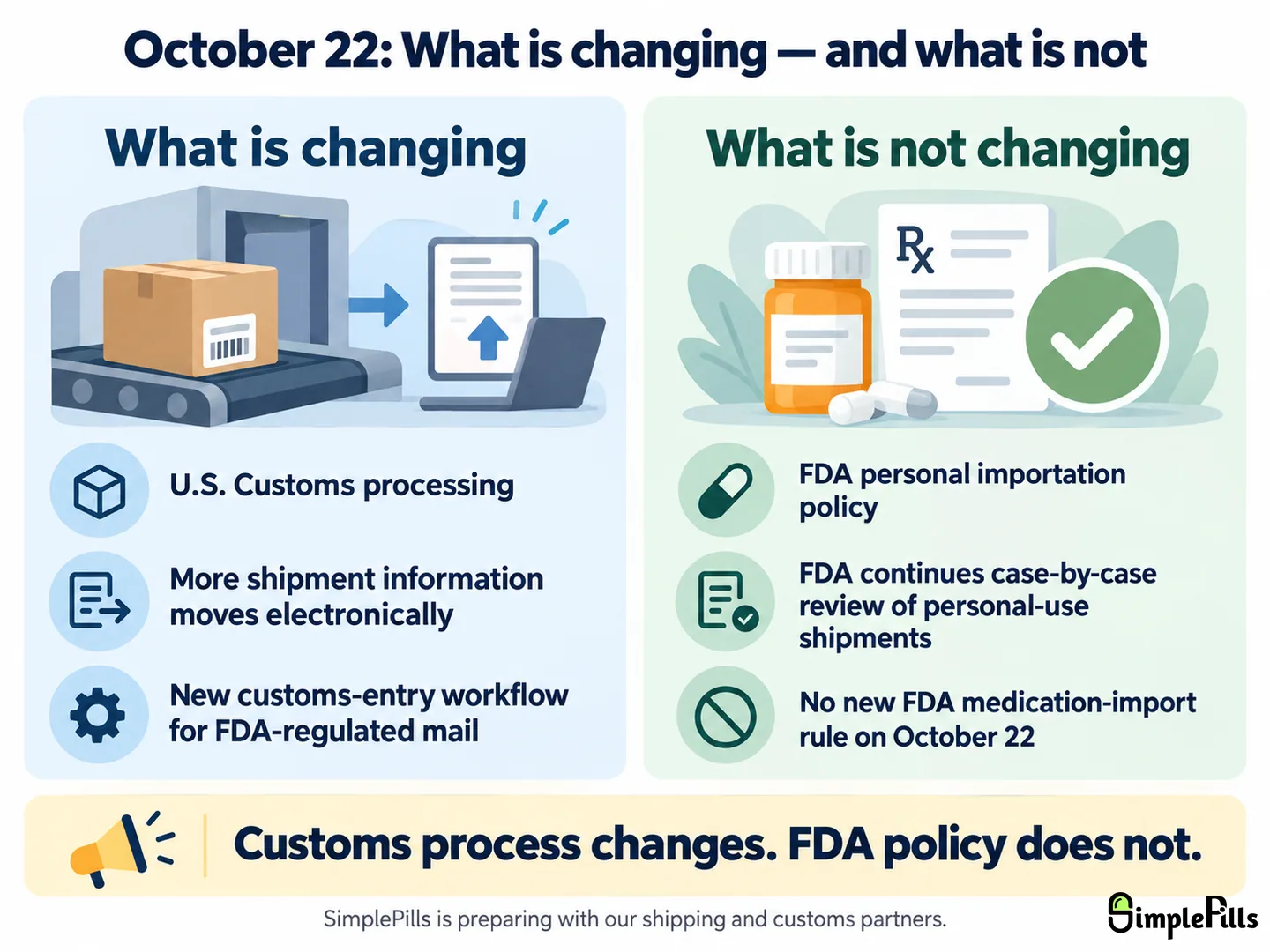
What is changing — and what is not?
The key is to separate Customs processing from FDA medication rules.
How FDA personal importation works today
FDA guidance can seem confusing because it says that, in most circumstances, importing a prescription drug that is already available in the U.S. is not permitted.
At the same time, FDA has a longstanding personal importation policy. Under that policy, FDA personnel may use enforcement discretion in allowing for personal-use situations. They may consider factors such as the amount being shipped, why it is being imported, whether it presents an unreasonable health risk, and whether it appears to be for personal use rather than resale. This case-by-case approach already exists today, and the October 22 Customs change does not replace or change it.
What changes on October 22?
U.S. Customs and Border Protection (CBP) is moving more international-mail processing into its electronic systems. CBP began testing the new electronic process - Entry Type 13: Informal Mail Entry - on September 22, 2026. Beginning October 22, all medication mail packages will be transition to the new Entry Type 13.
This new process requires the sender to provide more shipment and product information electronically so Customs and FDA can process the package. For patients, this is mainly a behind-the-scenes change.
What does this mean for SimplePills patients?
At this time, we do not expect patients to need to do anything differently. You can continue placing your order and providing your prescription as usual.
Individual packages can still be selected for Customs or FDA review, just as they can today. The new process does not remove that possibility, but it also does not create a new FDA prohibition on personal-use medication shipments from Canada.
What SimplePills is doing
We are receiving direct updates from U.S. Customs and working with our shipping and customs partners to prepare for the new process. Our goal is to make sure the required shipment and medication information can continue to move through the U.S. customs system correctly.
We are monitoring the rollout closely and will update patients if anything changes that may materially affect service.
Our commitments remain the same:
- No expected interruption: We currently expect customers to continue ordering and receiving medications as usual.
- No tariff costs passed on to patients: SimplePills continues to cover applicable U.S. tariff costs.
- Shipment protection: If a package is not delivered because of a U.S. Customs issue, we will send a replacement at no additional cost.
The bottom line
October 22 changes how certain medication shipments are processed through U.S. Customs. It does not change FDA's existing personal importation policy.
Based on what we know today, we expect the change to be largely behind the scenes for SimplePills patients.
References
- U.S. Customs and Border Protection: E-Commerce Frequently Asked Questions (opens in a new tab)
- U.S. Customs and Border Protection: Test of the New Electronic Informal Entry Process for Mail (opens in a new tab)
- U.S. Food and Drug Administration: Personal Importation (opens in a new tab)
- U.S. Food and Drug Administration: Regulatory Procedures Manual, Chapter 9 (opens in a new tab)